06
12/22
05:14
28
11/14
11:19
Vocoder (Voice Coder)
This is a short media history of technical sound coding and distortion, from the military scrambling of speech through the robotic sounds of Kraftwerk to today’s linear predictive coding burned into mobile phones.
04
03/14
10:45
Sampling
Some weeks ago, I was discussing the term sampling; it was of course in relation to electronic music. I’m not into sound or music and my take on the conversation was that sampling is part of visual media too. My argument is that taken as a three-dimensional object, the moving image needs to be sampled to be experienced. Two axes of the object are the spatial coordinates x and y, and the third axis is time. Thus, film samples the moving image in the time-axis at 24 images per second; analogue video and digital video add to the sampling the spatial coordinates. However, the reorganization of a particular beat or sequence of beats of music to produce a new composition, rhythm, or even musical genre has no counterpart in the moving image media. One could argue that the narration and even framing or images of a particular film of video are remixed producing thus new productions. This is done all the time in cinema and more conspicuously in T.V. spots. This however is different from sampling and follows the logic of remix and media quotation (remediation?). When there is a case of visual sampling it is the sound that creates the rhythm, not the moving image.
Visual sampling? Close your eyes and see if you miss the images.
MONDOVISION (official full version) from Giovanni Sample on Vimeo.
Earlier and most sampled beats in popular music.
02
01/13
20:58
21
08/12
11:50
60X60 Radio Request Extravaganza
Zoommetry will be played during the 60X60 Radio Request Extravaganza programme at WGDR 91.1 next Friday 24th August. Below is the official announcement. You can listen to the show live at: WGDR Live
60×60 Radio Request Extravaganza 2012 is going to happen at WGDR 91.1 FM Plainfield, Vermont on August 24th at 8:00 PM – August 25th at 6:00 AM Eastern Standard Time.

31
08/11
19:39
Pure Data convention 2011

Three weeks ago I attended the 4th Pure Data (PD) convention. This time it was organised in Weimar and Berlin. The convention lasted one week and included conferences, workshops, concerts, and installations. The frame for the convention was Weimar, which has a name in art history: Goethe, Schiller, Bach, and the Bauhaus were there.
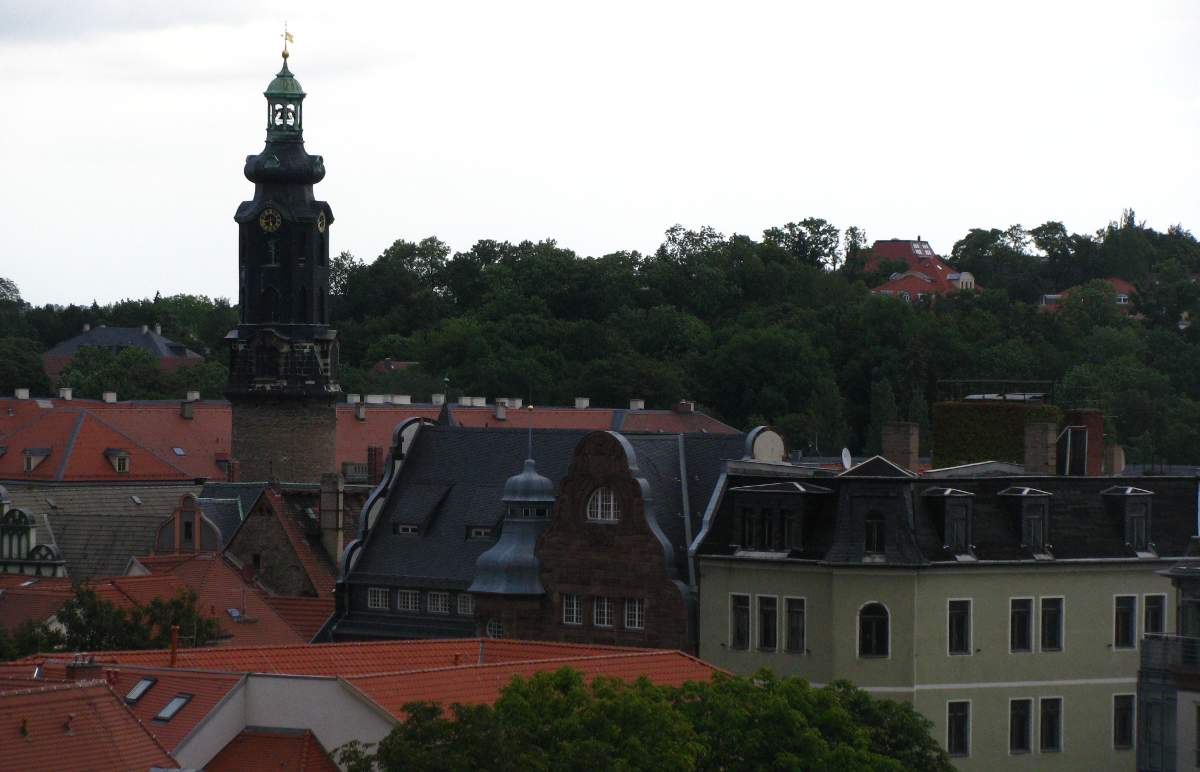
The conferences were technical oriented. The topics included the implementations, the developing of tools for PD, extensions to PD, and sound projects using PD. The workshops happened in the afternoon and there were for beginners and for experienced users. I took part in the beginners workshop, especially in the visual ones as GEM for beginners, GLSL, and Understanding the PD Data Structures. The concerts were scheduled in the evening; they were amusing, exciting, and inspiring. Although I enjoyed most of them I got impressed by the works of Chikasi Miyama, Hsin-jen Wang, Jinyao Lin, Oscar Martin (Noish), Cyrille Henry and Nicolas Montgermont, Dan Wilcox, and Onyx Ashanti. From my point of view, these were the most aesthetically refined works. They depict too a wide range of expressions to be found in contemporary digital/electronic art. An impression of each concert could be got at the convention website. Finally, from the installations I would like to highlight Tafel by Alexandre Castonguay, Cymatic Imprints by Donna Legault, and Concerto para Lanhouse by Giuliano Obici. They all graciously combined machinic poetry and ingeniousness which made me wonder if I weren’t in a Gibsonian reality.
A small bite of what happened in Weimar could be listen to below.
Chikashi Miyama.Black Box. Record of a live performance in the 4th PD Convention 2011. Weimar, Germany. Duration: 7:17
[audio:http://www.pktweb.com/drnn1076/sound_works/black_box_(Chikashi Miyama)_PDcon_weimar_2011.mp3]
08
04/11
02:12
Topografias at Festival Internacional de la Imagen
My most recent work, Topografías, has been selected for presentation in the Media Art show at the coming X Festival Internacional de la Imagen in Manizales, Colombia.
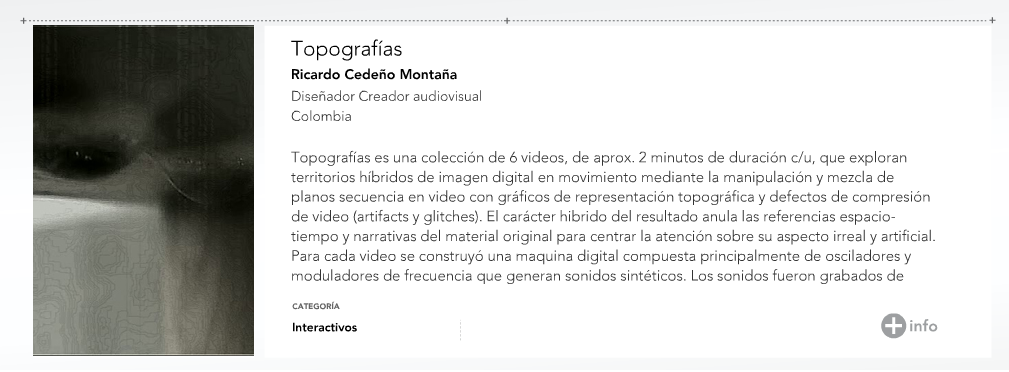
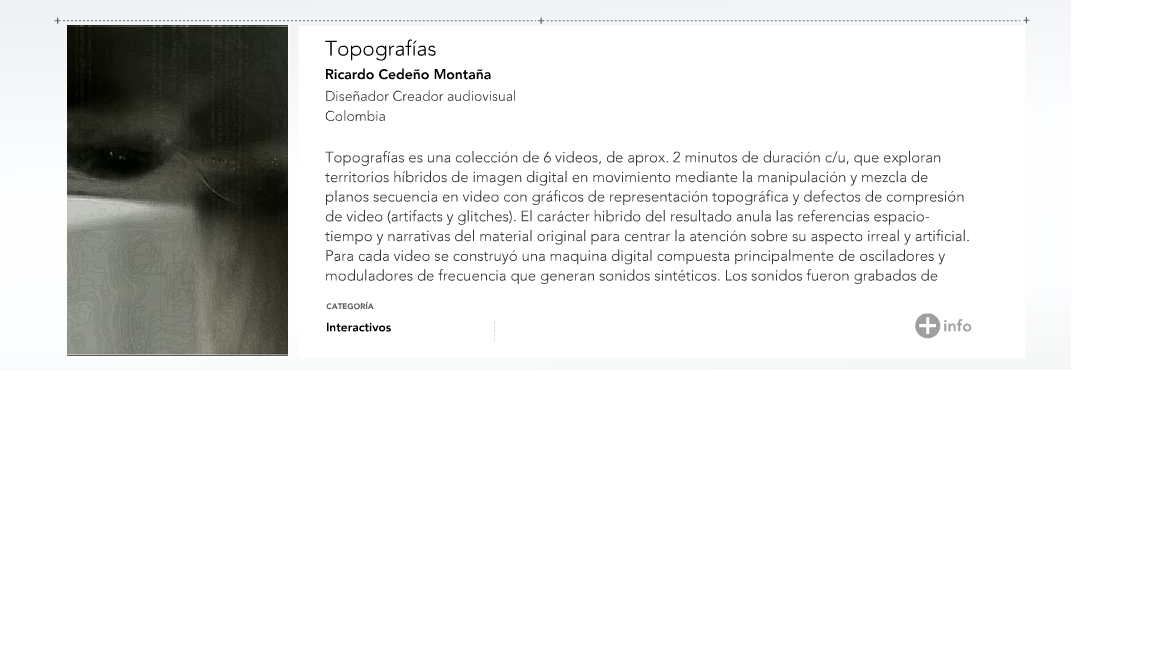
Topografías is a collection of 6 videos, of approx. 2 minutes length each, in DVD-video. This work explores the hybrid territories in the moving image through the manipulation and mix of live-footage with graphics of topographic representations and digital video defects (artifacts and glitches). The hybrid character in the outcome eliminates the spatio-temporal and narrative references of the source material to centre the attention upon its unreal and artificial aspect. For each sound, a machine composed of modulators and oscilloscopes was made. All sounds were recorded in real-time and improvisatory sessions.
This series of videos and the final piece in DVD-video was developed using exclusively free software, under GNU/GPL licenses. Codecs and containers for audio and video are free, too. The platform for production was openSUSE; video editing, mix, and composting was made in Kdenlive and Avidemux, and oscilloscope machines were built on Pure Data. All source files are available for downloading at Topografías.
29
05/10
02:07
machinic combination of oscillators
Machinic is about actualizing one instance of a series of combinatorial productive options which already lie on the matter. In that sense the quality of being exists on the matter and not before it, in order words the way the elements and materials are combined and formed is not given in advanced but exerted during the actualization of the process. To separate matter and form, as if they were different entities, divests matter of its productiveness. It is to think of it as dead. The productive assemblages of matter demand of the creator an attitude in which form is not externally imposed to the material but it is teased out of the matter. In a machinic production, a series of processes bring the material to a fluid and fertile state for the emergence of a form.
To listen on-line:
machinic midi data. Ricardo Cedeño Montaña. 2010. Duration: 8:00
[audio:http://www.pktweb.com/drnn1076/sound_works/machinicmididata.mp3]
Noisecraft data. Ricardo Cedeño Montaña. 2010. Duration: 4:50
[audio:http://www.pktweb.com/drnn1076/sound_works/noisecraftdata.mp3]
To download:
machinic midi data 14MB
noisecraft data 8.5MB
08
07/08
12:26
UT-{machine-human}-sound
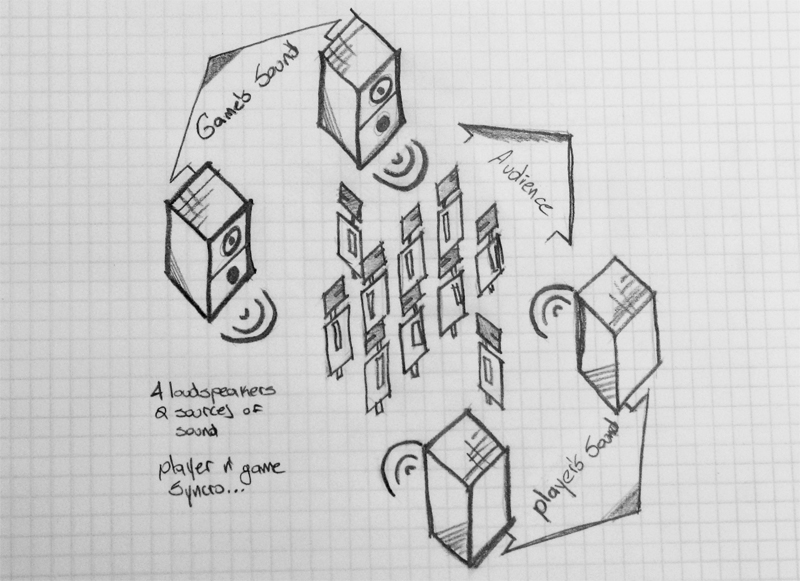 This piece experiments and explores with video-games sources of sound. It does exploit the video game as a main source for creation, through using its inner elements. It does not exploit the video games as a environment for performing and creating sound. Instead of participating in the video-game, I use its readymade sound-objects in order to repurpose them in a sound landscape that depicts the tension in the machinic dialogue between player and game. In this work I stop interacting with the video-game object, to explore other aesthetic dimensions in the performance of its elements, not dependent on the conditions and parameters impose by the participation in the video-game. It seeks for new forms and sources in sound creation and experience in digital media.
As a landscape this piece has two different layers in a cybernetic state. One layer is the game sound and the second one the player sound. The former use Unreal Tournament 2004 as source and the latter use human body sounds as source. Those are the two sonic dimensions of a cybernetic exchange in a video-game playing session, they have to be played simultaneously in an installation arranged for four loudspeakers as can be seen in conceptual drawing, that opens this post.
It is based on the Sonichima concept.
Sound credits:
Unreal Tournament 2004 sounds extracted using: Dragon UnPACKer v 5.2.0b “cinthia” by Alexander Devilliers. Unreal Tournament 2004 by Epic GamesUnreal Tournament original soundtrack by: Kevin Riepl
Human sounds: Heart sounds recorded by Morton E. Tavel, M.D., professor or medicine, Indiana University, School of medicine and consulting cardiologist with Northside Cardiology Inc Indianapolis, USA. Lungsounds recorded by Dr. G. Wuertemberger, Freiburg, Germany and professor R.L.H. Murphy, jr., Boston, USA.
Mixed bY Ricardo Cedeño Montaña.
The first track is already mixed for two loudspeakers, second and third tracks are the two separate layers for performing in the original arrangement. Here they can be downloaded: Human – Machine
| UT-machinic 8:13 [audio:http://pktweb.com/drnn1076/mdm/soundprojects/ut-2004/game.mp3|bg=0x003300|loader=0x000000|leftbg=0x888888|rightbg=0x888888|lefticon=0xd1d1d1|righticon=0xb1b1b1|rightbghover=0x888888] |
| UT-human 8:13 [audio:http://pktweb.com/drnn1076/mdm/soundprojects/ut-2004/human_web.mp3|bg=0x003300|loader=0x000000|leftbg=0x888888|rightbg=0x888888|lefticon=0xd1d1d1|righticon=0xb1b1b1|rightbghover=0x888888] |
| UT-machine 8:13 [audio:http://pktweb.com/drnn1076/mdm/soundprojects/ut-2004/machine_web.mp3|bg=0x003300|loader=0x000000|leftbg=0x888888|rightbg=0x888888|lefticon=0xd1d1d1|righticon=0xb1b1b1|rightbghover=0x888888] |
23
04/08
09:54
Stockhausen In memoriam [playlist]
I published the following post on sound projects’ blog, some months ago. Even though the time has passed I would like to share with all of you this short playlist. The context of this post had to do with, by that time, the recent death of one of the most influential German composers in the XX century: Karlheinz Stockhausen.
A small playlist I did to complement my previous contribution to this blog, Karlheinz Stockhausen, his contemporaries ( Webern, Boulez, Varèse), and students (Kraftwerk, Can, Hassell). I hope you do enjoy it.
|
|